What Is Polyurea Coating? A Wisconsin Homeowner’s Guide
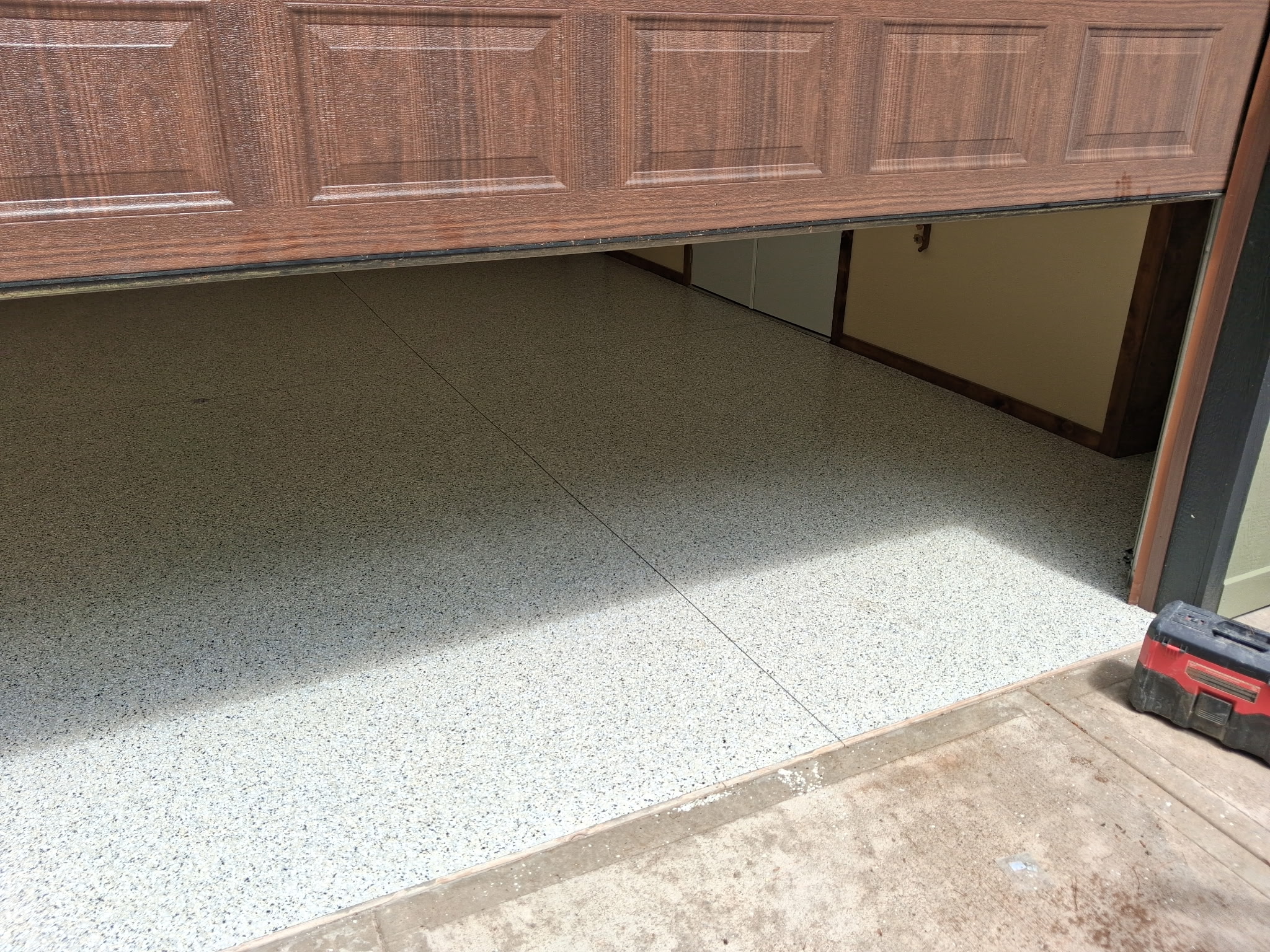
When people research floor coatings, they usually hear about epoxy and polyaspartic. But there’s a third chemistry worth understanding: polyurea. It’s prized for its toughness and flexibility, and it plays an important role in how modern coating systems are built.
So what exactly is polyurea?
Polyurea is a fast-curing coating chemistry known for outstanding abrasion resistance, flexibility, and durability. Unlike rigid coatings that can crack under stress, polyurea flexes slightly with the concrete as it expands and contracts through temperature swings — a real advantage in a state where floors go from below zero to summer heat.
How polyurea, polyaspartic, and epoxy work together
These aren’t always competing products — in a professional system they often complement each other. Epoxy and polyurea are frequently used as a strong base coat that penetrates and bonds to properly prepared concrete, while polyaspartic (a specialized form of polyurea) is a popular UV-stable topcoat. The right combination depends on your slab, your usage, and the look you want.
Where polyurea shines
Because of its flexibility and impact resistance, polyurea is a great fit for floors that take a beating — busy garages, workshops, pole barns, and commercial spaces with rolling loads. It resists chipping from dropped tools, handles hot-tire pickup, and stands up to road salt tracked in over the winter.
Why professional prep still matters most
No coating chemistry — polyurea included — can overcome poor preparation. The single biggest factor in how long a floor lasts is whether the concrete was diamond-ground, cracks were repaired, and the coating was applied at the right thickness. A premium chemistry over a shortcut prep job will still fail.
Which system is right for your floor?
The honest answer is that it depends. The best way to know is a free on-site assessment — we look at your concrete’s condition, how you use the space, and your goals, then recommend the polyaspartic, epoxy, or polyurea system that fits. Request a free quote and we’ll walk you through the options with no pressure.