
Avoiding Garage Floor Coating Failures Through Proper Preparation Techniques
- Logen Doiel
- 4 days ago
- 3 min read

Garage floor coatings can transform a dull, cracked concrete surface into a durable, attractive floor that resists stains, wear, and damage. Yet many coatings fail prematurely, peeling, bubbling, or cracking within months or a few years. The main reason for these failures is poor preparation before applying the coating. Understanding how to properly prepare your garage floor can save you time, money, and frustration.
Why Garage Floor Coatings Fail
Most coating failures trace back to one root cause: inadequate surface preparation. Concrete is a porous, rough material that requires careful treatment before coatings can bond properly. When the surface is not ground, cleaned, repaired, and profiled correctly, the coating struggles to adhere and eventually peels or bubbles.
Common causes of garage floor coating failure include:
Inadequate surface preparation: Skipping or rushing grinding and cleaning leaves contaminants or smooth patches that prevent adhesion.
Moisture issues: Excess moisture in the concrete can cause coatings to delaminate or bubble.
Improper crack repair: Unrepaired or poorly repaired cracks allow movement and cause coating cracks.
Low-quality materials: Cheap coatings may not bond well or resist wear.
DIY installation mistakes: Lack of experience leads to uneven application or missed prep steps.
Applying coatings over contaminated concrete: Oil, grease, or dust can block adhesion.
Each of these problems can be avoided with the right preparation and professional techniques.
The Importance of Surface Preparation
Surface preparation sets the foundation for a long-lasting garage floor coating. It involves several key steps:
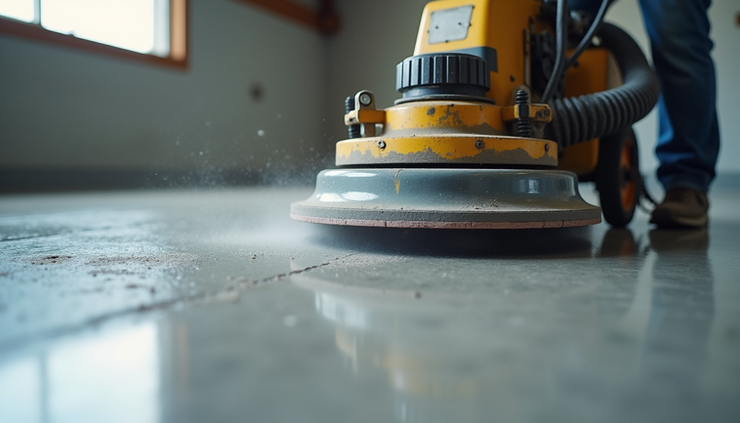
Diamond Grinding
Diamond grinding removes the top layer of concrete, exposing a fresh, clean surface. This process also creates a rough texture or profile that helps coatings bond mechanically. Without grinding, coatings may sit on a smooth or contaminated surface and peel off.
Cleaning
After grinding, the floor must be thoroughly cleaned to remove dust, debris, oils, and other contaminants. This often requires industrial vacuums, degreasers, and sometimes etching solutions. Any residue left behind reduces adhesion.
Crack Repair
Cracks in the concrete must be filled with flexible, durable materials designed for floor coatings. This prevents cracks from telegraphing through the coating or causing it to crack.
Moisture Testing
Concrete moisture levels should be tested before coating. High moisture can cause bubbling or delamination. If moisture is present, vapor barriers or special coatings may be needed.
Profiling
Creating the right surface profile ensures the coating has enough texture to grip. This profile is measured on a scale called the Concrete Surface Profile (CSP). Most coatings require a CSP between 2 and 4 for optimal adhesion.

Common Mistakes That Lead to Failure
Many garage floor coating failures happen because of shortcuts or lack of knowledge. Here are some mistakes to avoid:
Skipping grinding: Applying coating over old, smooth concrete or paint leads to poor adhesion.
Ignoring moisture: Not testing or addressing moisture causes bubbling and peeling.
Using wrong repair materials: Using rigid fillers on moving cracks causes cracks in the coating.
Applying over oil stains: Oil and grease repel coatings and cause delamination.
DIY without experience: Uneven application, wrong mixing ratios, or missed prep steps cause failure.
Using low-quality coatings: Cheap products may look good initially but fail quickly.
How Professionals Prepare Garage Floors
Professional contractors follow strict preparation protocols to ensure coatings last for years. Their process typically includes:
Diamond grinding to remove old coatings, smooth rough spots, and create the right surface profile.
Cleaning with industrial vacuums and degreasers to remove all contaminants.
Crack repair using flexible epoxy or polyurethane fillers designed for floor coatings.
Moisture testing with calcium chloride or relative humidity tests to confirm suitability.
Applying primers or moisture barriers if needed.
Using high-quality coatings formulated for garage floors and concrete.
At Armor Shield Concrete Coatings, preparation is never skipped. Their team understands that the durability and appearance of the floor depend on the foundation laid during preparation.
Tips for Homeowners Considering Garage Floor Coatings
If you plan to coat your garage floor, keep these tips in mind:
Hire experienced professionals who use diamond grinding and proper repair materials.
Ask about moisture testing before coating.
Avoid DIY unless you have experience with concrete preparation and coating application.
Choose high-quality coatings designed for garage floors.
Prepare the garage by removing oil stains and cleaning thoroughly before the contractor arrives.
Understand that preparation takes time and effort but pays off in a durable floor.

Final Thoughts on Garage Floor Coating Success
Garage floor coatings fail mostly because of poor preparation. Grinding, cleaning, repairing cracks, and moisture testing create the foundation for coatings to bond and perform well. Skipping these steps leads to peeling, bubbling, and cracking.


Comments